THE LAW
Built not to harm hearing
The Toys (Safety) Regulations 2011 say toys designed to emit a sound must be made so the sound cannot impair children's hearing, with limits on impulse and continuous noise.
Check the distance drumstoy
WHAT THE STUDIES SAY
Toy drums are meant to make a noise.
UK toy safety law says the sound must never be able to harm a child's hearing. A government-commissioned study of 178 toys found most were fine, and that the biggest factor is how close the toy gets to the ear.
85 dB(A) proposed limit at 25 cm
Check the distanceTHE SHORT ANSWER
The law sets the standard, and most toys meet it.
How close a toy gets to the ear changes everything.
THE LAW
The Toys (Safety) Regulations 2011 say toys designed to emit a sound must be made so the sound cannot impair children's hearing, with limits on impulse and continuous noise.
Check the distanceDISTANCE
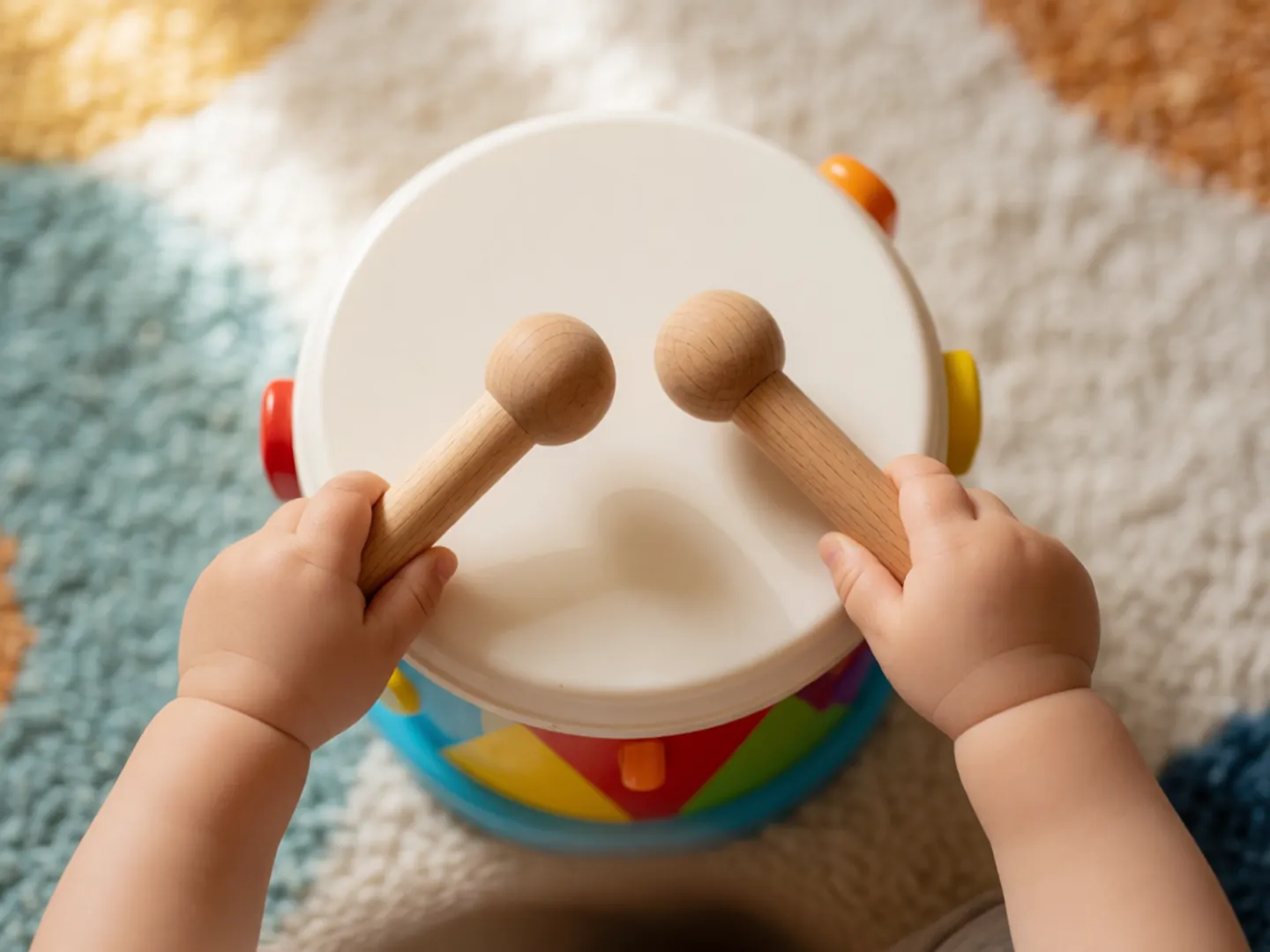
Sound from a small source falls by about 6 dB each time the distance doubles. Children typically play with toys 25 to 30 cm from the ear, but almost any toy can end up within 2.5 cm.
Simple habitsMUSICAL TOYS
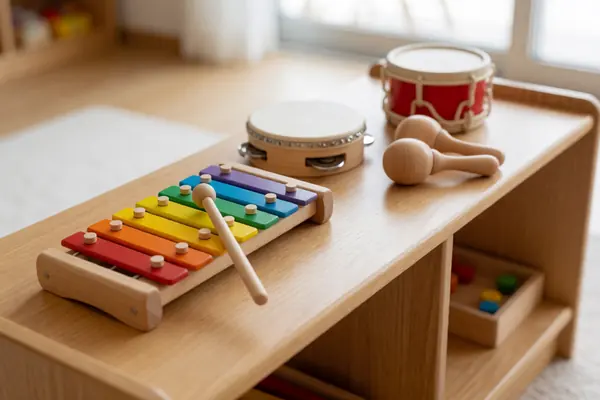
In the study, all toy musical instruments were within 8 dB of the proposed time-averaged limit, and only one, a tambourine, went over the peak limit.
See the numbers
FOUR EASY HABITS
None of these spoils the fun. They follow what the study found about distance, impulsive noise and how toys are actually used.
A drum played at arm's length or further is far quieter at the ear than one held up to the face.
Impulsive toys, such as cap guns, were the type most likely to break the recommended peak limits.
Headphones at full volume were one of the main exceptions in the study.
Toys sold in Great Britain should carry a UKCA or CE marking, and any warnings must be in English, starting with the word Warning.
TWO NUMBERS WORTH KNOWING
A sample of toys from shops and makers,
and the everyday noise children already hear.
178 toys
Toys measured for the UK government study
Most complied with the recommended limits. The notable exceptions were headphones at full volume, some toys held close to the ear, and most impulsive toys such as cap guns.
TOYS TESTED · ISVR 1997
≈ 90 dB(A)
Underground trains and football crowds
Time-averaged levels on underground trains can approach 90 dB(A), similar to crowds at football matches. Bursting a crisp packet can peak near 140 dB(C) at 50 cm.
EVERYDAY NOISE · ISVR 1997
The report aimed to keep a child's daily noise exposure below 80 dB(A) averaged over 8 hours, assuming up to 2.5 hours a day with noisy toys, so toys add little to the noise children already meet.
A QUICK DISTANCE CHECK
Pick how far the toy is from a child's ear. The value shows how much louder or quieter it is than at 25 cm, the distance used for the proposed limits.
Based on the inverse square law as set out in a 1997 Institute of Sound and Vibration Research report for the Department of Trade and Industry. General information, not medical advice.
WHY TOYS ARE TREATED SEPARATELY
Children are unlikely to play with toys for more than about 3 hours a day, and unlikely to hear noise from toys for more than 1 to 1.5 hours. That is why toy limits can be a little higher than all-day limits.
But toys get close to the ear in a way most other noise does not. The study's approach was that toys should not pose a risk in themselves, and should not add much to risks children already face from everyday noise.
Questions
The Toys (Safety) Regulations 2011 require toys designed to emit a sound to be made, in terms of maximum impulse and continuous noise, so that the sound cannot impair children's hearing.
In the 1997 ISVR study, 30% of toy musical instruments were below the proposed 85 dB(A) at 25 cm, another 40% were less than 5 dB above it, and all were within 8 dB. Only a tambourine exceeded the peak limit.
For a small source, sound falls by about 6 dB for each doubling of distance, and about 20 dB for a tenfold increase. A toy at 2.5 cm is roughly 20 dB louder than at 25 cm.
Headphones at full volume, some toys designed to be held close to the ear, and most impulsive toys such as cap guns.
Toys placed on the Great Britain market should carry a UKCA or CE marking, and safety warnings must be in English and start with the word Warning or Warnings.
Updated
ABOUT THIS NAME
drumstoy.com is part of the DoodleSale portfolio. It isn't in an auction right now, but you can ask about leasing it.